




Baby Shower Game Prizes: How Many to Buy and What to Spend
You normally need one baby shower game prize for each winning person or team, not one for every guest. Count the games, decide whether each game has an individual or team winner, and add one flexible spare for a tie. For example, four individual games usually need five prizes: four planned prizes and one reserve.
The quick prize formula
- Write down every game you plan to play.
- Mark each game as individual, pair or team-based.
- Count the maximum number of winners you will reward.
- Add one spare prize or an agreed tie-break.
- Multiply the total by your target spend per prize.
Simple formula: planned winners + one spare = prizes to buy. If a winning team will share one prize, count that team as one winner. If every team member receives something, count each person instead.
How many prizes for three, five or seven games?
- Three individual games: buy three prizes plus one spare, for four in total.
- Five individual games: buy five prizes plus one spare, for six in total.
- Seven individual games: buy seven prizes plus one spare, for eight in total.
- Three team games: buy three shareable prizes, or count the likely number of winning team members before shopping.
- A mixed schedule: calculate individual and team rounds separately, then add the results together.
Does the guest count change the number of prizes?
Guest count affects the game format more than the prize count. A shower for ten guests and a shower for thirty guests can both use four games and four main prizes. Larger groups are more likely to need teams, duplicate answer sheets and a clear tie-break, but they do not automatically require a prize for everyone.
If you want every guest to take something home, treat that as a favour budget rather than a game-prize budget. Keeping the two budgets separate prevents small thank-you gifts from using the money reserved for winners.
Set the budget before choosing the prizes
Choose a comfortable total first, then divide it across the number of prizes. You can keep every prize the same value or reserve a little more for a final feature game.
- Four prizes at £5: £20, plus wrapping.
- Six prizes at £7: £42, plus wrapping.
- Five standard prizes at £5 and one feature prize at £15: £40, plus wrapping.
- Three shareable team prizes at £10: £30, plus wrapping.
Include gift bags, labels, delivery charges and any voucher fees in the total. Keeping a small contingency means an unexpected tie does not force the host to improvise.
Individual games versus team games
Individual quiz, bingo and guessing games suit one prize per round. For pair or team games, tell guests before play whether the prize is shared or whether each winning player receives an item. A shareable food hamper can work for a small team, while matching notebooks, chocolate bars or gift cards are easier when every team member should receive the same reward.
How to handle ties fairly
Choose the tie rule before the first game. Good options include one factual tie-break question, the closest numerical estimate or a short sudden-death round. Avoid changing the rule after seeing who has tied. If the atmosphere is relaxed, using the spare prize for a joint winner is often the simplest option.
Should every game have the same prize value?
Similar-length games should have broadly similar rewards. It is reasonable to offer a larger prize for a final team challenge or a game that takes more preparation, but announce this clearly. Avoid attaching the most valuable prize to a random draw if other guests have spent much longer completing skill-based games.
A simple four-game prize plan
- Opening icebreaker: one small prize.
- Written quiz: one standard prize.
- Team challenge: one shareable prize or matching small prizes for the team.
- Final feature game: one feature prize.
- Reserve: one flexible gift card, chocolate box or notebook set for a tie.
How to organise the prize table
- Label each prize with the game number or name.
- Keep vouchers in their original envelopes with the value and expiry date recorded.
- Leave food sealed and retain ingredient and allergy information.
- Keep the tie prize separate so it is not awarded accidentally.
- Ask winners to choose only when the prizes are intentionally equal in value.
- Nominate one person to record winners if several games run close together.
What prizes should you choose?
Once the quantity and total spend are fixed, use our list of 30 baby shower game prize ideas to choose useful options under £5, £10, £15 and £25.
Plan the games and prizes together
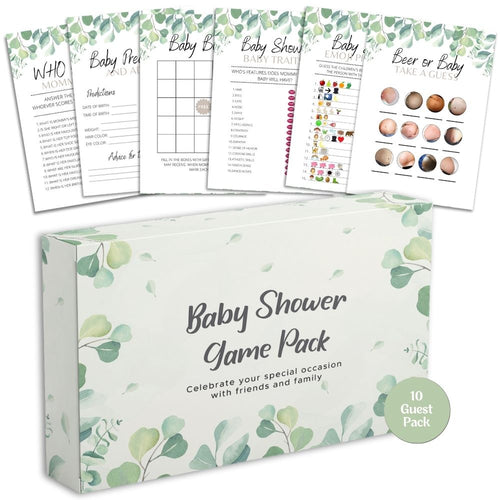
The easiest prize plan starts with a confirmed game schedule. The Forever Lily Baby Shower Games Bundle includes six coordinated games in several guest-pack sizes, so the host can choose the rounds first and buy only the prizes actually required.


