


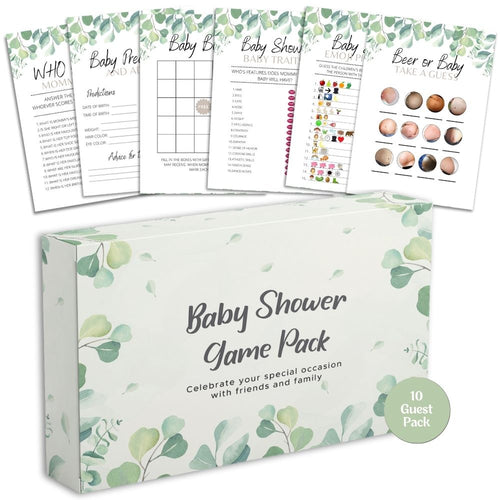


Baby Arrival Prediction Game: Cards, Rules and Scoring
In a baby arrival prediction game, guests guess the baby's actual birth date, then the host checks the answers after the family chooses to share the news. It is a light-hearted keepsake activity, not a way to predict labour or give pregnancy advice.
The simplest version needs only a name and a date on each card. Let the parents choose whether to include any other questions, and make taking part optional.
What you need
- One card or sheet per guest, plus pens.
- A box or envelope to keep the completed cards together.
- A written closing time and scoring rule.
- An optional small prize that can be given after the birth.
Plain paper works. For a ready-designed option, see our free Baby Predictions & Advice game. Check the questions with the parents first and leave any unwanted fields blank.
How to play: the date-only version
- Agree the boundaries. Ask the parents whether they want a prediction activity and whether they are happy to share an approximate due date. Do not disclose a planned birth date or private medical information.
- Explain the task. Each guest guesses the actual calendar date of birth, not the estimated due date. Include the year so every entry is clear.
- Allow a few minutes to complete a card. Guests can do this when they arrive or during a quiet break. No explanation for a guess is needed.
- Close entries. Collect the cards before the shower ends. Keep one entry per person and do not allow changes after the closing time.
- Keep the cards safely. Give them to the parents or an agreed helper. There is no winner to announce at the shower unless the baby has already arrived and the answer was kept private.
- Check later, without chasing. Once the parents have chosen to share the birth date, compare the entries and contact the winner in the way agreed beforehand.
A clear scoring rule
Award the win to the date with the smallest calendar-day difference from the actual birth date. Count guesses before and after the birth equally.
For example, if the baby arrives on 12 October, a guess of 10 October is two days away and a guess of 13 October is one day away. The 13 October guess wins.
State before collecting entries that equal-distance guesses share the win. If there is only one prize, use a random draw between tied entrants, with their agreement. Do not invent a new tie-break question after you have seen the answers.
A prediction card you can copy
- Your name: ____________________
- I think the baby will arrive on (day / month / year): ____________________
- A wish for the family: ____________________
Host note: One entry per person. Entries close at __________. Closest calendar date wins; ties share the win or enter a random draw, as announced before play. Results will only be checked if the family wishes to share them.
Optional time, weight and name guesses
Add these only if the parents are comfortable with them. Keep each category separate rather than combining days, minutes and weight into a confusing total score.
- Time: ask for a full date and time if you want the closest actual timestamp. Comparing clock times alone ignores which day was guessed.
- Birth weight: use one unit, such as grams, and the smallest absolute difference. Treat this as optional private information; never comment on whether a baby is a “good” size.
- Name: only include a name-guessing category if the parents welcome it. It is not a vote on what they should name their baby, and they do not owe anyone a reveal.
There is no need for guesses about the baby's sex, birth method or medical outcomes. If the family would prefer no birth predictions, replace the activity with wishes for the baby or favourite books to read together.
Can you play online or with guests who cannot attend?
Yes. Ask guests to send their name and date guess privately to one organiser before the closing time. Store those entries with the paper cards and apply the same rules. Ask permission before posting anyone's message or contact details in a shared group.
What if plans change or nobody wants to announce a winner?
Stop the game or keep the cards as private keepsakes. The family does not have to share a birth date, weight, photograph or update to complete a party activity. Avoid cash betting and promises that create an obligation to report back.
Pair it with a game you can finish at the shower
Predictions are quiet and self-paced, so one short, scored round can provide a different activity for guests who enjoy it. Use our baby shower game chooser to pick a suitable format, or explore the baby shower games collection for ready-made options. Keep the predictions, prizes and any sharing entirely optional.


