


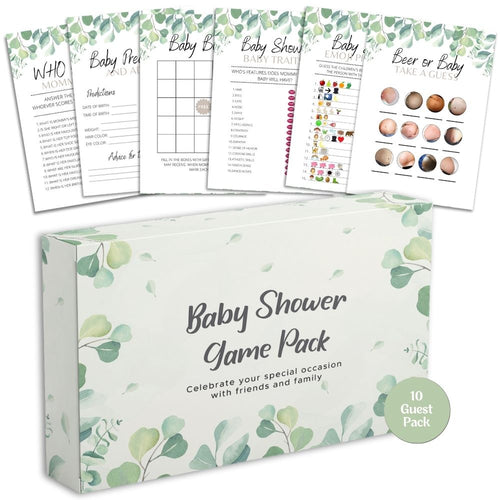


Baby Shower Games for Kids: 7 Quiet Table Activities
A quiet kids’ table gives children something clear to do while adults eat, talk, open gifts or play a separate game. It should stay within the main room or another fully supervised area—not function as unattended childcare. Choose large, simple materials, avoid activities involving unknown foods, and keep every task short enough for children to leave and return.
What to put on the table
- Washable pencils or markers and one paper pack per child.
- Large-print or picture-led instruction cards.
- A finished example for matching, drawing or story activities.
- A tray for completed pages and a separate waste container.
- Age-suitable materials checked by the child’s responsible adult.
- No loose glitter, blindfolds, unlabelled foods or small counters around younger children.
1. Picture baby bingo
Use cards containing simple pictures rather than words alone. An adult or older child calls each item while players mark it with a pencil. Play for one line and let everyone keep the card for another round. Prepare several card layouts so neighbouring players do not finish at the same time.
2. Baby animal pairs
Print large pairs of adult-and-young animal cards. For younger children, leave every card face up and ask them to build pairs. Older children can play a supervised memory version with the cards face down. Keep the cards large enough to handle easily and count them before clearing the table.
3. Colour and match
Give each child a sheet showing familiar items such as a book, blanket, teddy, socks and pram. A second sheet contains patterns or colours to match to each picture. There is no single “correct” colour scheme; the matching task simply gives the page some structure.
4. Finish the picture
Provide half-drawn friendly scenes—a teddy’s picnic, a bookshelf, a garden or a family day out—and invite children to complete them. Avoid asking children to draw the future baby or make predictions about appearance. Display finished pictures only with the child and responsible adult’s permission.
5. Picture-story cards
Lay out large cards showing a character, place and object. A child chooses one of each and draws or tells a short story connecting them. An adult can write down the child’s words. Keep prompts neutral and playful rather than asking for personal family information.
6. Older-kids word puzzle
Prepare a short word search or matching puzzle using easy celebration words such as family, welcome, book, teddy, blanket and party. Include an answer sheet and a large-print version. This activity suits confident readers and should sit beside picture options rather than replace them.
7. Design a friendly card
Children create a welcome or celebration card using paper, pencils and pre-cut shapes. Use glue sticks only with suitable supervision and avoid loose decorations that could later detach if the card is placed near a baby. Add a simple prompt: “Draw a favourite family activity” or “Choose a book to read together”.
How long should each activity last?
Plan for five to ten minutes per task and keep two choices available at once. The table can remain open for an hour, but children should be free to take breaks, eat with their adult or join a mixed-age game. Replace dried pens and remove finished work regularly so the area stays calm.
Support different reading and movement needs
Use pictures, demonstrate the first step and let children answer by pointing, drawing or speaking. Provide comfortable seating and leave a clear route around the table. Do not make finishing a page a condition of receiving a participation item. A responsible adult should decide whether the activity suits their child.
When children and adults want to play together
Use the mixed-age baby shower games guide for team bingo, drawing, photographs and collaborative stories. The age-appropriate baby shower planning guide covers different age bands, supervision and a realistic event schedule.
Pair the kids’ table with a paper-game round
The Forever Lily Baby Shower Games Bundle contains six coordinated games in guest packs for 10, 20, 30 or 40 people. Adults and older children can work in teams while younger guests use the picture activities.


